
August 26, 2021 · 5 min read
Why Is Bathroom Waterproofing Important? Step-by-Step Application
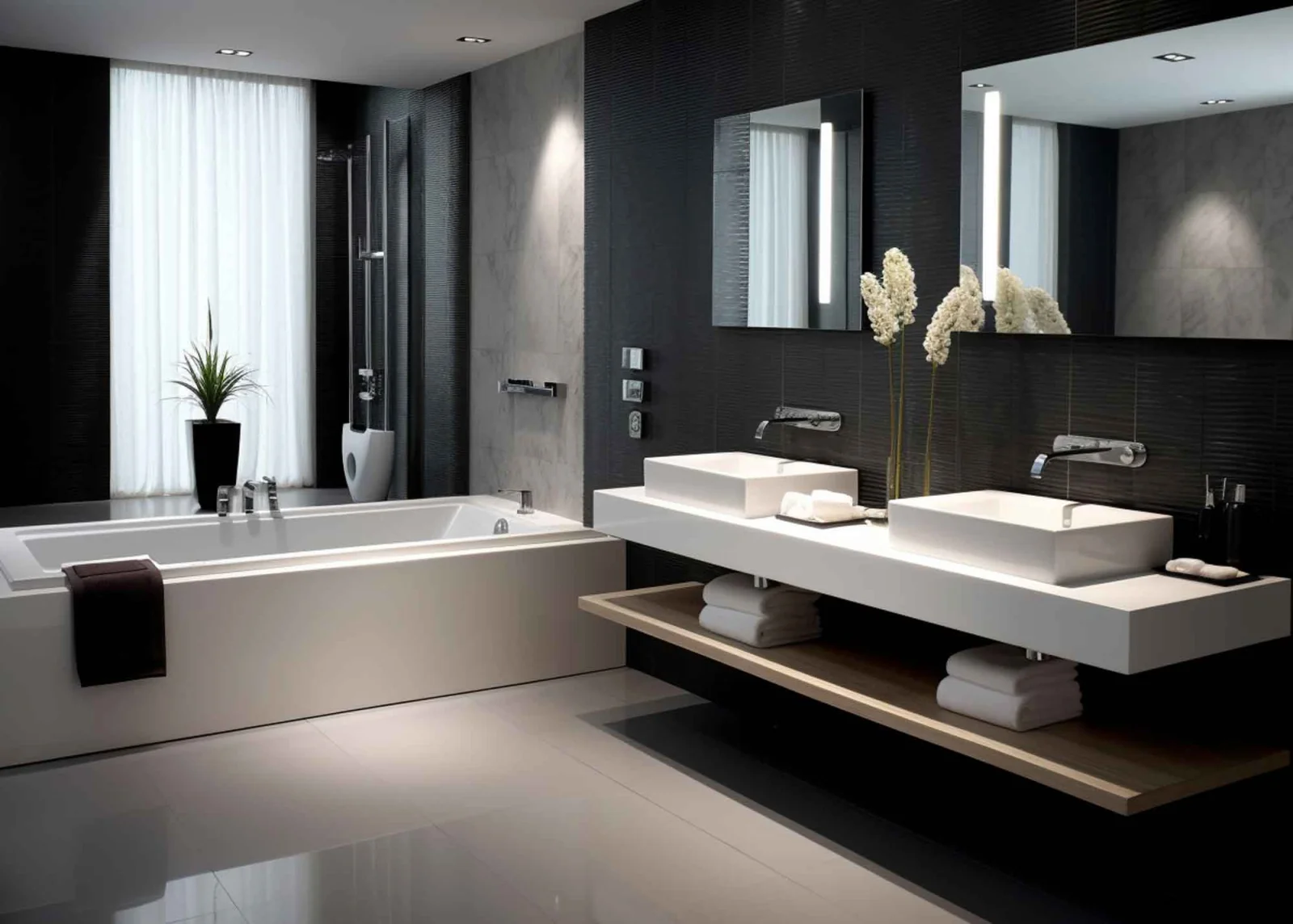
Bathrooms are the areas of a home where water is used most intensively. These areas, however, demand serious attention not only aesthetically but also technically. This is because a bathroom without proper waterproofing can over time lead to serious problems such as damp, mould, leaks and structural damage. Waterproofing is a basic requirement for long-lasting, healthy and durable living spaces.
In this article, we will cover why waterproofing is important in bathrooms, which materials it is carried out with, and the correct step-by-step application process.
What Is Waterproofing and Why Is It Necessary?
Waterproofing comprises the applications carried out to protect building elements against water. In wet areas such as bathrooms, it extends the life of the building by preventing water from seeping into floor and wall surfaces.
Over time, water seeps through the concrete and joint gaps and causes staining, spalling and damp on the ceilings of the floor below. This is not merely an aesthetic problem; it also causes the corrosion of reinforcement in reinforced concrete, structural weakness and health risks such as mould fungus.
In other words, a bathroom without waterproofing poses a serious threat not only to appearance but also to the durability of the building.
Why Is Waterproofing So Important in a Bathroom?
- Protects floors and walls: Prevents water seeping under the tiles from damaging the concrete surface.
- Prevents leaks to the floor below: Water stains on ceilings are the most frequently encountered problem.
- Prevents mould and fungus: Bacteria grow easily in areas that stay constantly damp.
- Extends the life of the building: Increases the building's durability by preventing corrosion of the concrete reinforcement.
- Supports energy efficiency: Damp-free environments reduce heat loss.
- It is economical: Taking precautions early prevents the high renovation costs that could arise later.
In short, waterproofing is a necessity not only for comfort but also for structural safety. Especially in newly built homes, waterproofing must be carried out in accordance with the TS EN 14891 standard.
Materials Used for Waterproofing
The modern construction chemicals industry offers various technical solutions for bathrooms. Foremost among these are cement-based waterproofing mortars.
These products are two-component:
- Component A: Cement-based mortar in powder form,
- Component B: Polymer-based liquid admixture.
When these two components are mixed, they form a flexible, high-adhesion and watertight coating.
For example, KraftBau Two-Component Waterproofing Mortar (KR 5100 or KR 5200) provides maximum waterproofing performance in wet areas. Thanks to its flexible structure, it withstands expansion and contraction in the floor.
In addition;
- Primers: Balance the absorbency of the substrate and ensure the waterproofing mortar bonds to the surface.
- Waterproofing tape: Prevents leaks at wall-floor junctions.
- Corner fillets: Protect the weak points at corners.
- Finishing tile adhesive and grout: The covering components that complete the waterproofing.
How Is Bathroom Waterproofing Done? Step-by-Step Application
A professional waterproofing application calls for care. Here is the correct application process:
1. Surface Preparation
The surface must be clean, dry, dust-free and sound. Old coverings, loose parts, oil or dirt residues are cleaned off. Cracks in the floor are repaired.
If the surface is highly absorbent, a primer is applied to balance its absorbency.
2. Reinforcing the Corners and Joints
At wall-floor junctions and around plumbing pipes, waterproofing tape or flexible corner fillet is placed. This ensures that the weak points where water leaks most are protected.
3. Preparing the Waterproofing Mortar
With two-component waterproofing products, the liquid component (B) is poured into a clean container and the powder component (A) is mixed in to obtain a homogeneous consistency.
Using a low-speed mixer is recommended to prevent the mix from forming lumps.
4. First Coat Application
The mix is applied to the entire surface as a thin layer with a brush or roller. Corners and junctions in particular must be coated carefully.
The first coat ensures that the material penetrates the surface well.
5. Second Coat Application
After the first coat has dried (after approximately 3–4 hours), the same process is repeated in the opposite direction. This achieves a homogeneous and complete coating.
The total application thickness is usually around 2 mm.
6. Drying and Tiling
Once the application is complete, the waterproofing mortar is left to dry for at least 24 hours. Tiling with tile adhesive can then be carried out.
Once the surface is completely dry, ceramic, granite or vinyl flooring can be laid.
Common Mistakes
Even in professional applications, some mistakes are made from time to time:
- Applying the mortar directly without priming
- Not observing the drying time between coats
- Not using tape and corner fillet
- Creating a risk of cracking by applying too thick a layer
- Laying tiles before the drying process is complete
These mistakes cause the waterproofing to fail within a short time. The application steps must therefore be followed in full.
Professional Advice
- In a bathroom, not only the floor but also the area around the shower enclosure and the wall surfaces up to a height of 20–30 cm must be waterproofed.
- Plumbing penetrations (taps, drains, pipe outlets) must always be integrated with the waterproofing material.
- When choosing a product, the flexibility class (for example fully flexible or semi-flexible) should be determined according to the area of application.
- High-quality products make a difference in terms of both watertightness and long service life.
The KraftBau Two-Component Waterproofing Series offers a professional solution in this regard. It has been tested for both high flexibility and resistance to water pressure.
Conclusion: A Strong Water Barrier for Long-Lasting Bathrooms
The bathroom is the area of the home most exposed to water. When waterproofing is done correctly, however, both the durability of the building and living comfort are preserved.
Problems such as mould, damp, leaks and bad odours are completely eliminated.
Choosing the right product is as important as applying it correctly. KraftBau waterproofing products, with their high-performance formulations, offer lasting solutions in bathrooms, kitchens and all wet areas.
Remember: Waterproofing is not a luxury but an indispensable investment in the health of the building.
Looking for the right product for your project?
Filter the catalogue by location and problem.