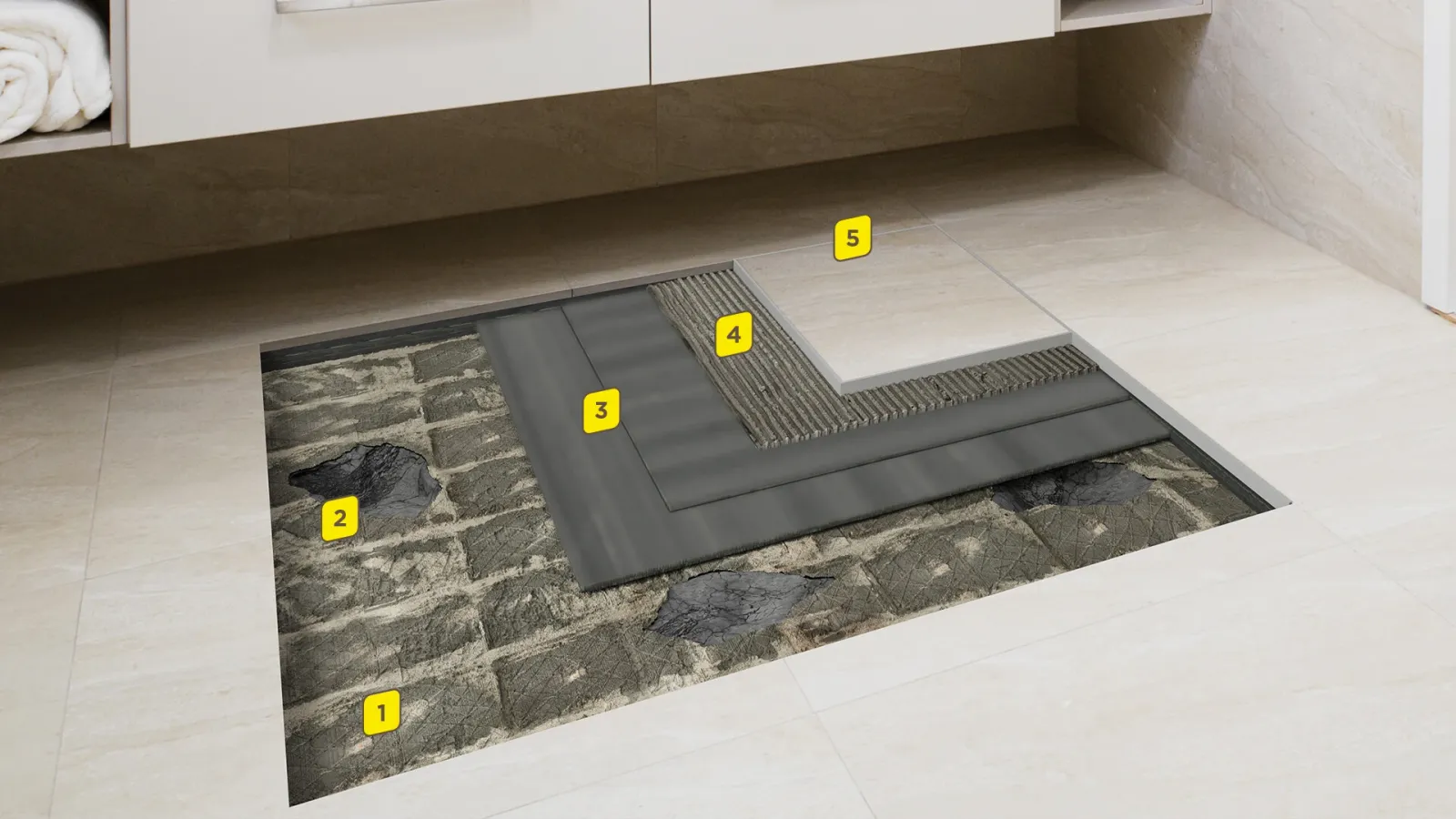
Test the soundness of the existing covering
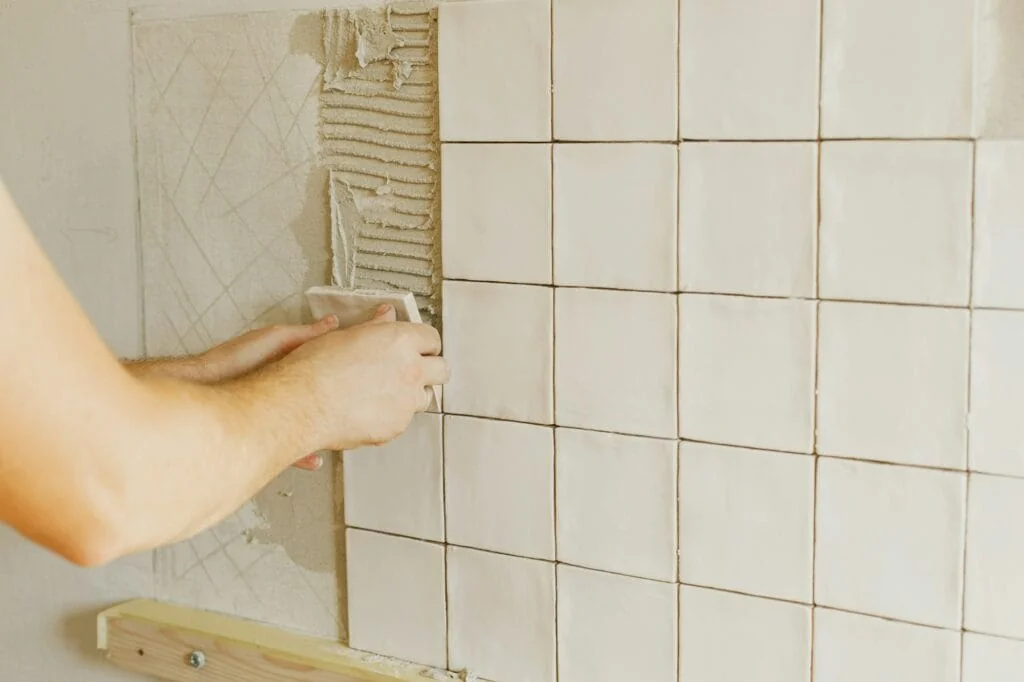
The surface is checked across its entire area. Tiles that move, are cracked, have lifted or sound hollow are removed, and the resulting voids are consolidated with a suitable repair product. If there is structural movement, persistent damp or a water leak, the cause is resolved first. A new covering must not be used to hide an old problem.
Clean the surface and prepare it for adhesion
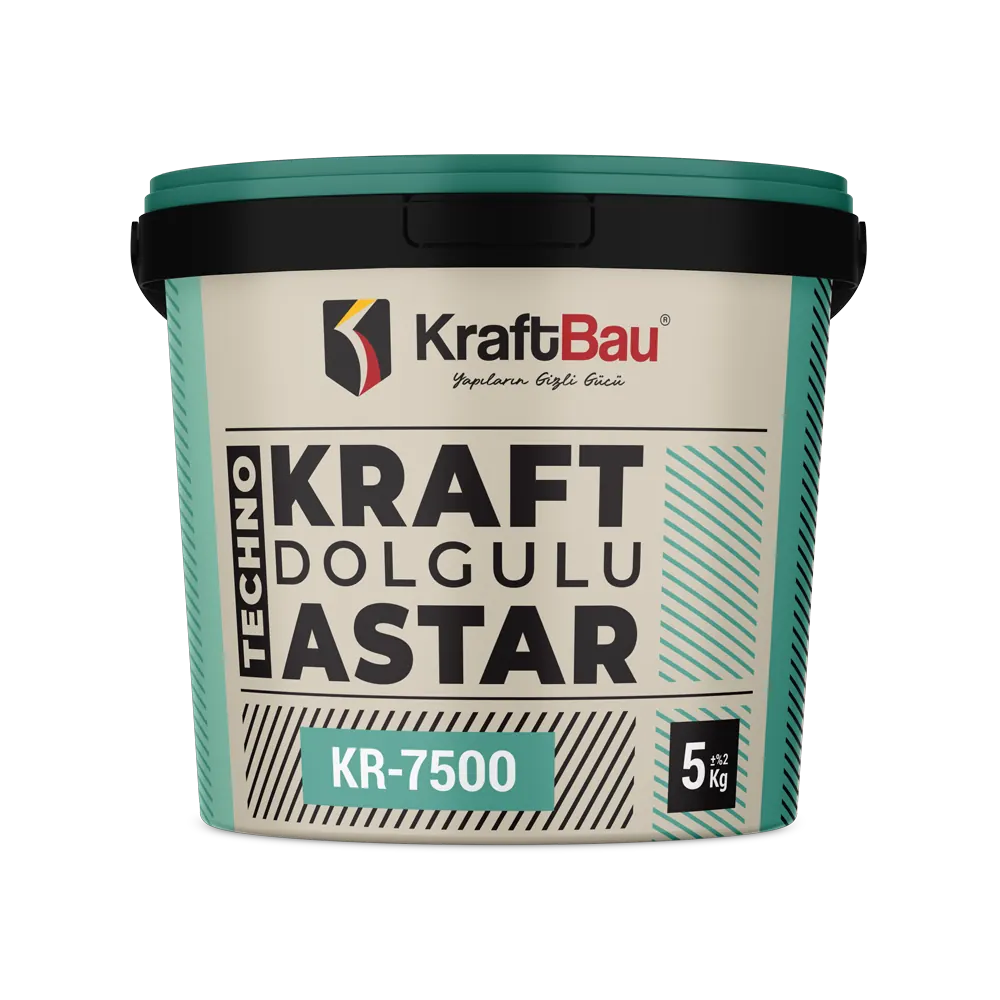
Soap, grease, polish, cleaning chemicals and other bond-breaking residues are completely removed. The surface is rinsed and brought to a condition suitable for application. On sound, low-absorbency old tiles, KR-7500 TECHNO KRAFT FILLED PRIMER is the adhesion layer of the system. The current technical data sheet is used for application and waiting-time information.
Lay the new tiles
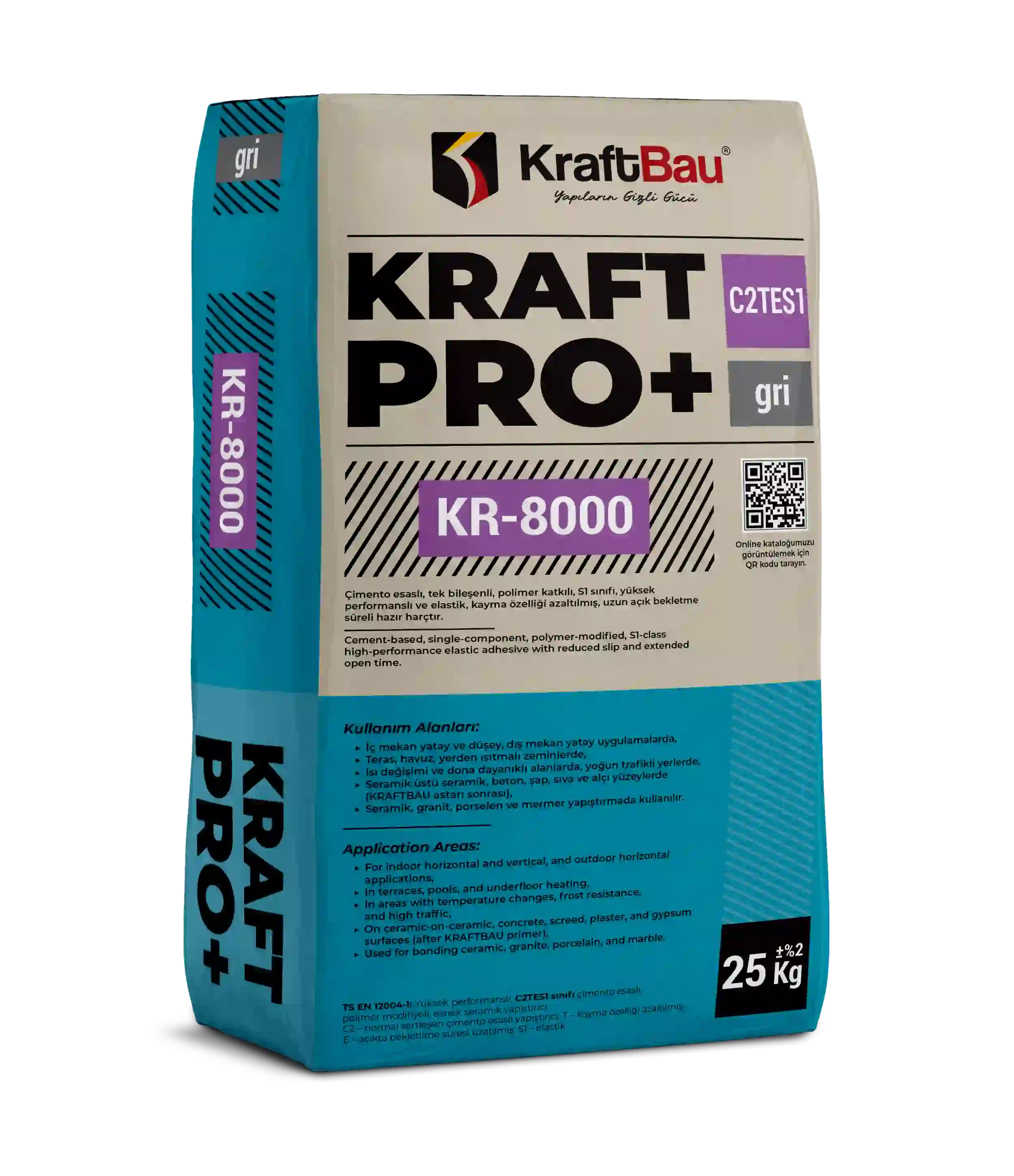
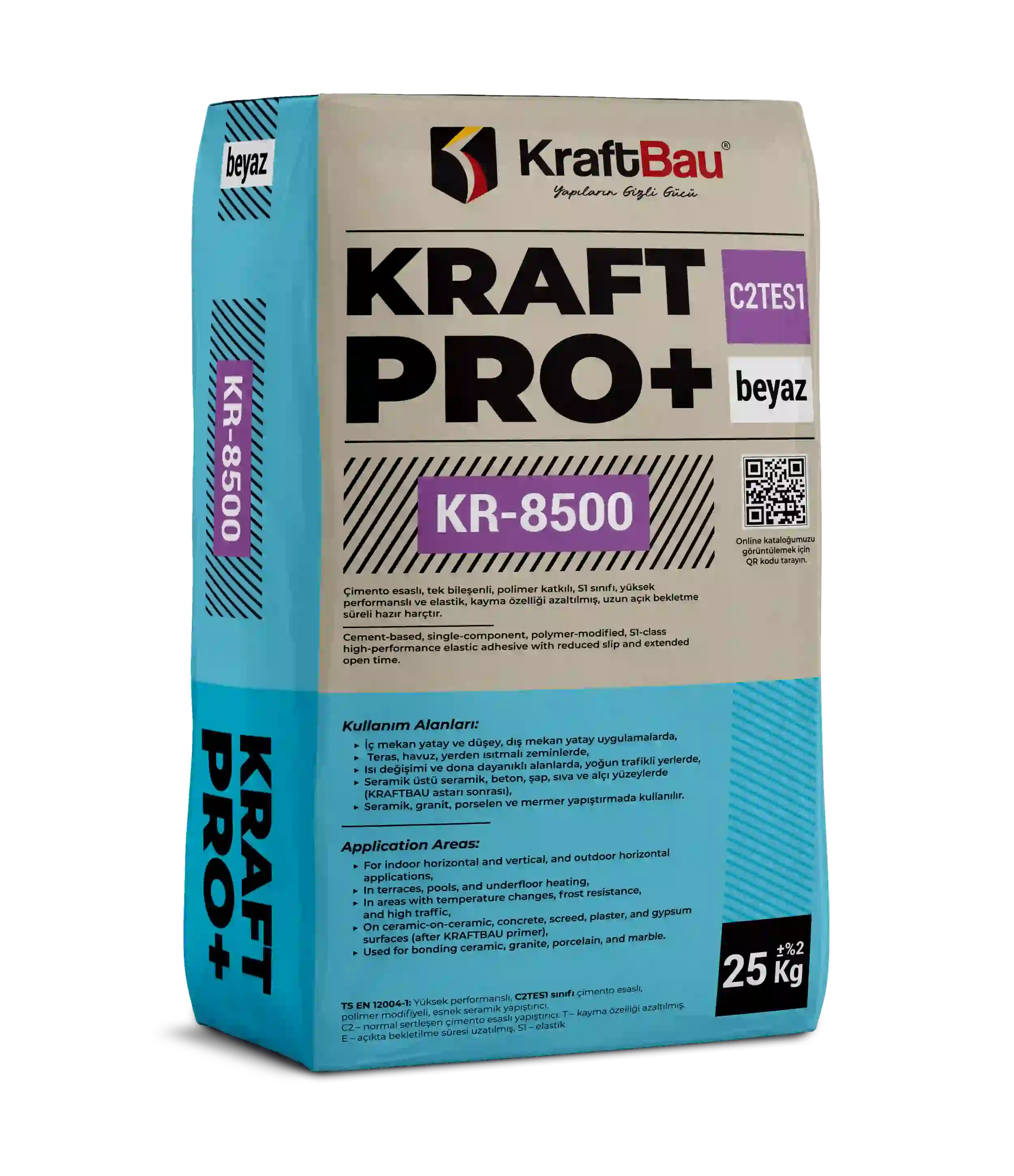
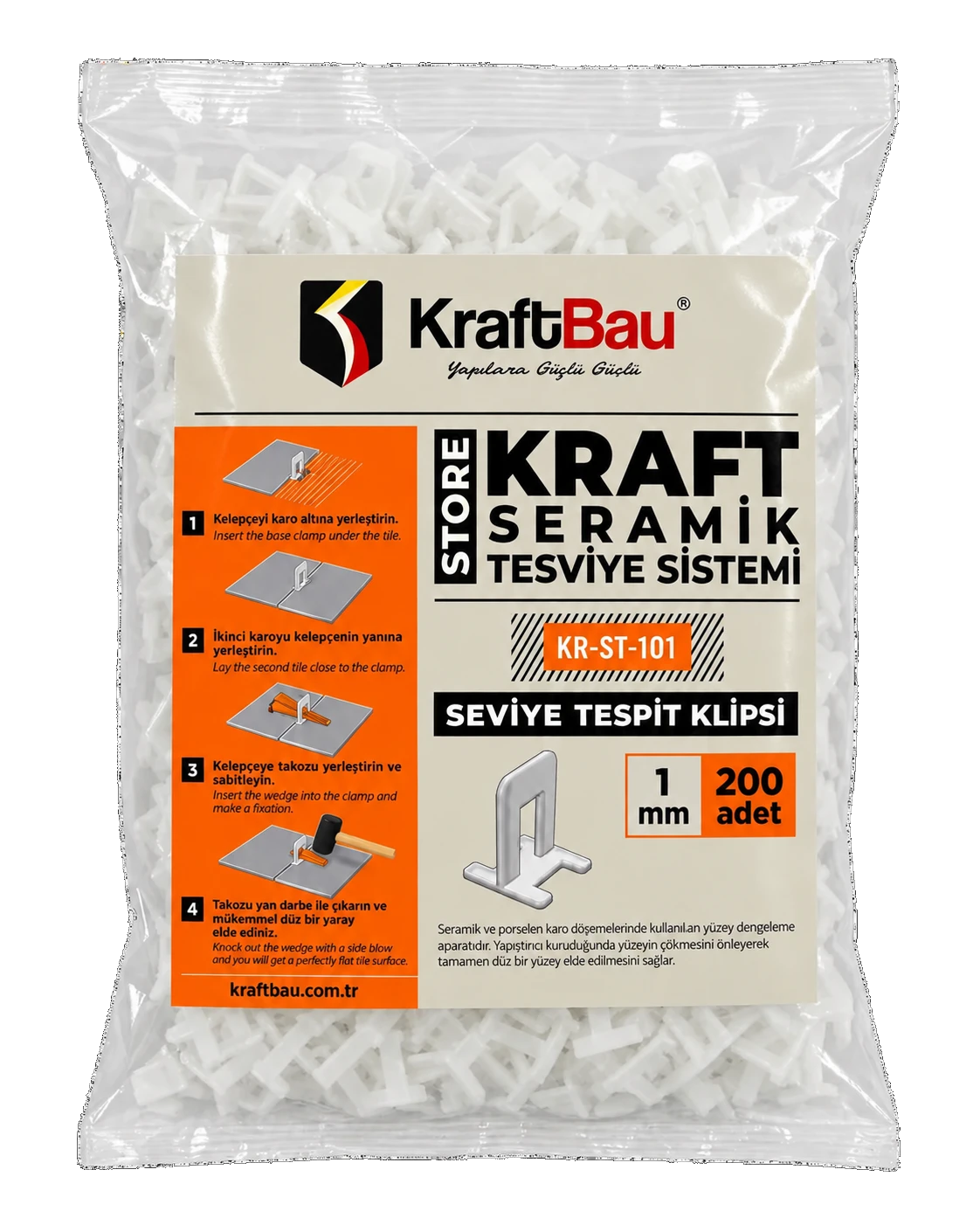
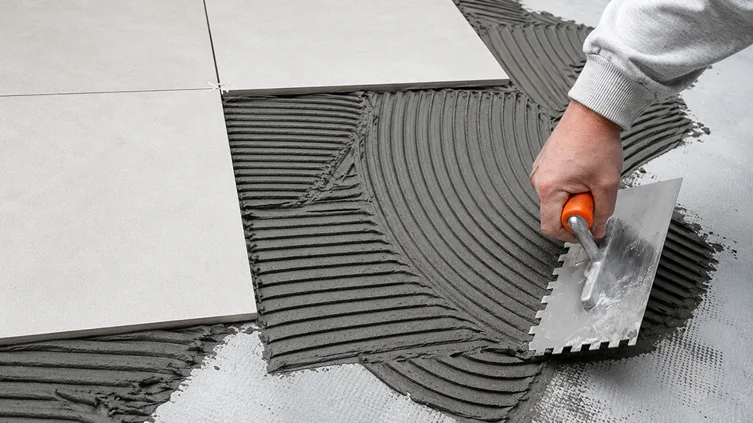
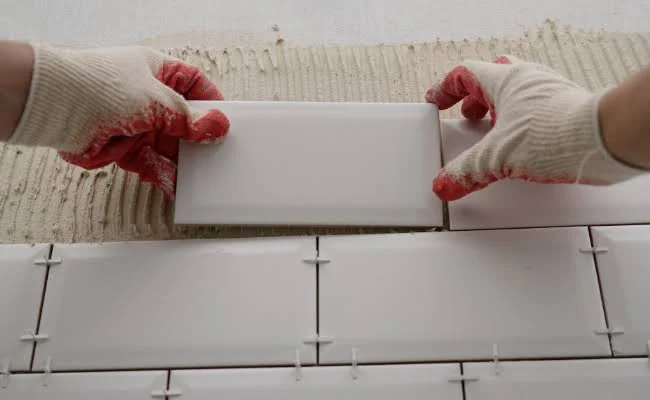
Once the primer is ready for application, the main grey adhesive KR-8000 KRAFT PRO+ C2TES1 is used. For coverings that require white, KR-8500 is chosen. For large formats, the adhesive is applied to both the substrate and the back of the tile, and uniform contact is checked. Surface level is managed with KR-ST clips and wedges.
Complete the grouting according to the area of use
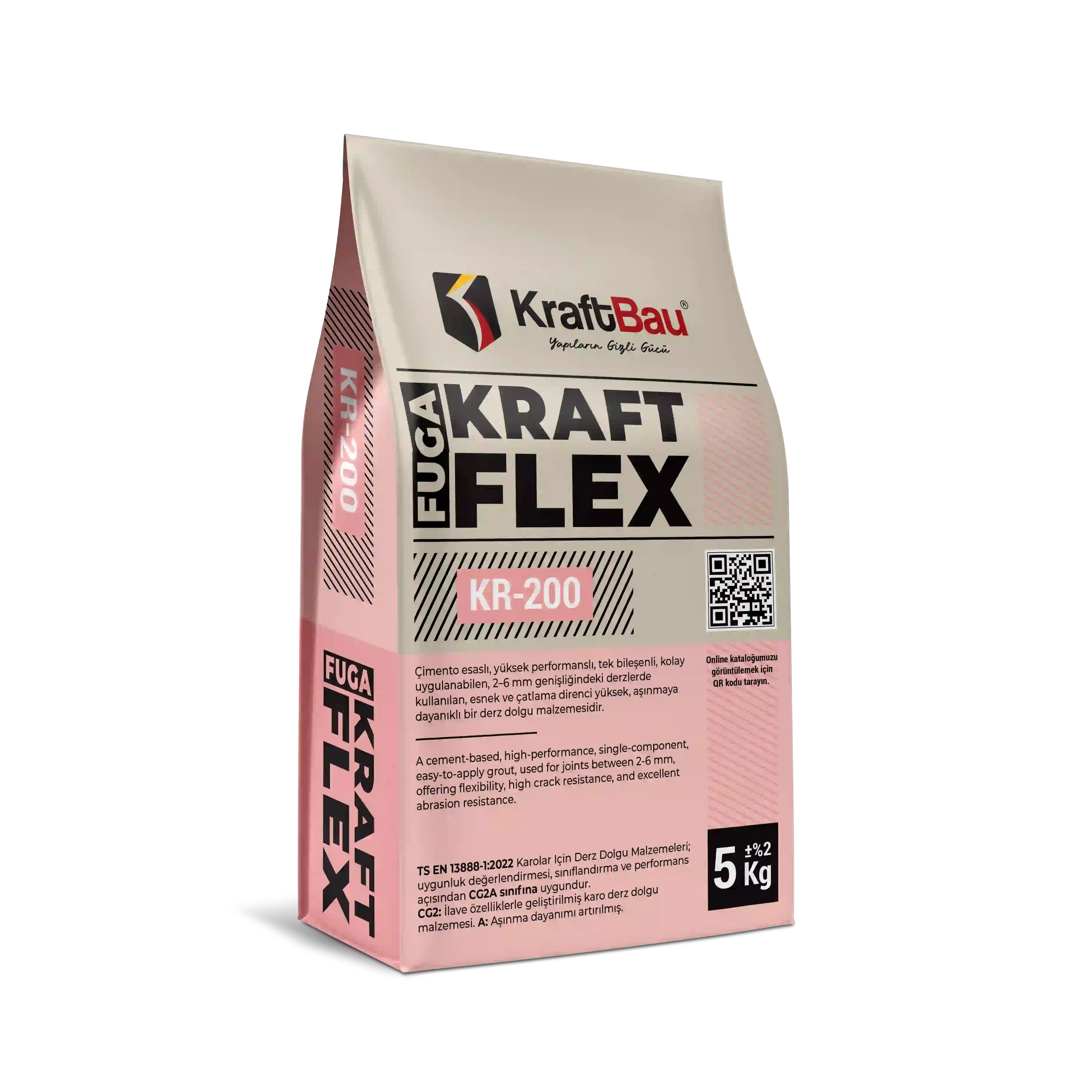
KR-200 FUGA KRAFT FLEX is recommended for dry indoor areas and KR-250 FUGA KRAFT POOL for wet areas. In areas requiring technical, mechanical or high chemical loads, KR-300 FUGA KRAFT EPOXY is considered. Corner and movement joints must not be closed with rigid grout.
Calculate the heights before application
The new layer creates a level difference at door openings, skirting boards, drain levels, sanitaryware connections and under furniture. These details should be measured before materials are purchased.
Product recommendations in this content are based on the KraftBau system file. For consumption, mixing ratio, layer thickness and waiting times, refer to the product's current technical data sheet (TDS); for your project conditions, get technical support.