Start the selection with the substrate
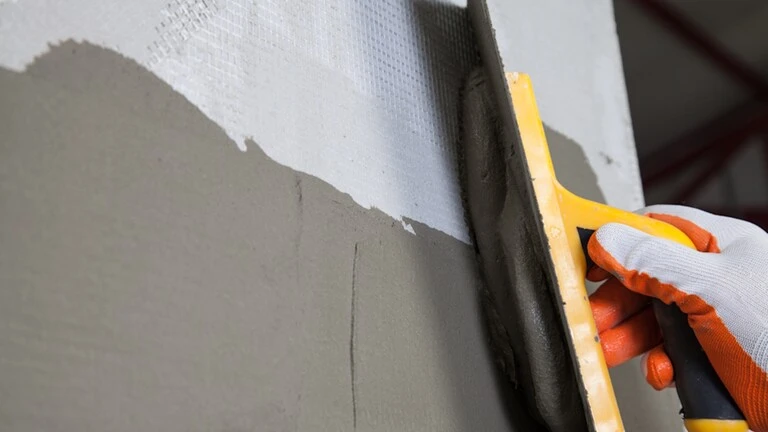
The substrate must be clean, dry, sound and load-bearing. Choosing a strong adhesive is not enough on its own unless dust, oil, paint residue and any layers that could reduce adhesion are removed. On absorbent mineral substrates a suitable primer is used where considered necessary; on low-absorbency substrates such as old tiles, KR-7500 TECHNO KRAFT Filled Primer is considered. For fair-faced concrete, KR-7000 should only be considered within its own defined area of use; it is not a general primer applied to every substrate.
Conditions such as old tiles, waterproofed surfaces and underfloor-heated floors behave differently from a standard wall. On these substrates, classes that require higher adhesion and deformability come to the fore.
Assess tile type and size together
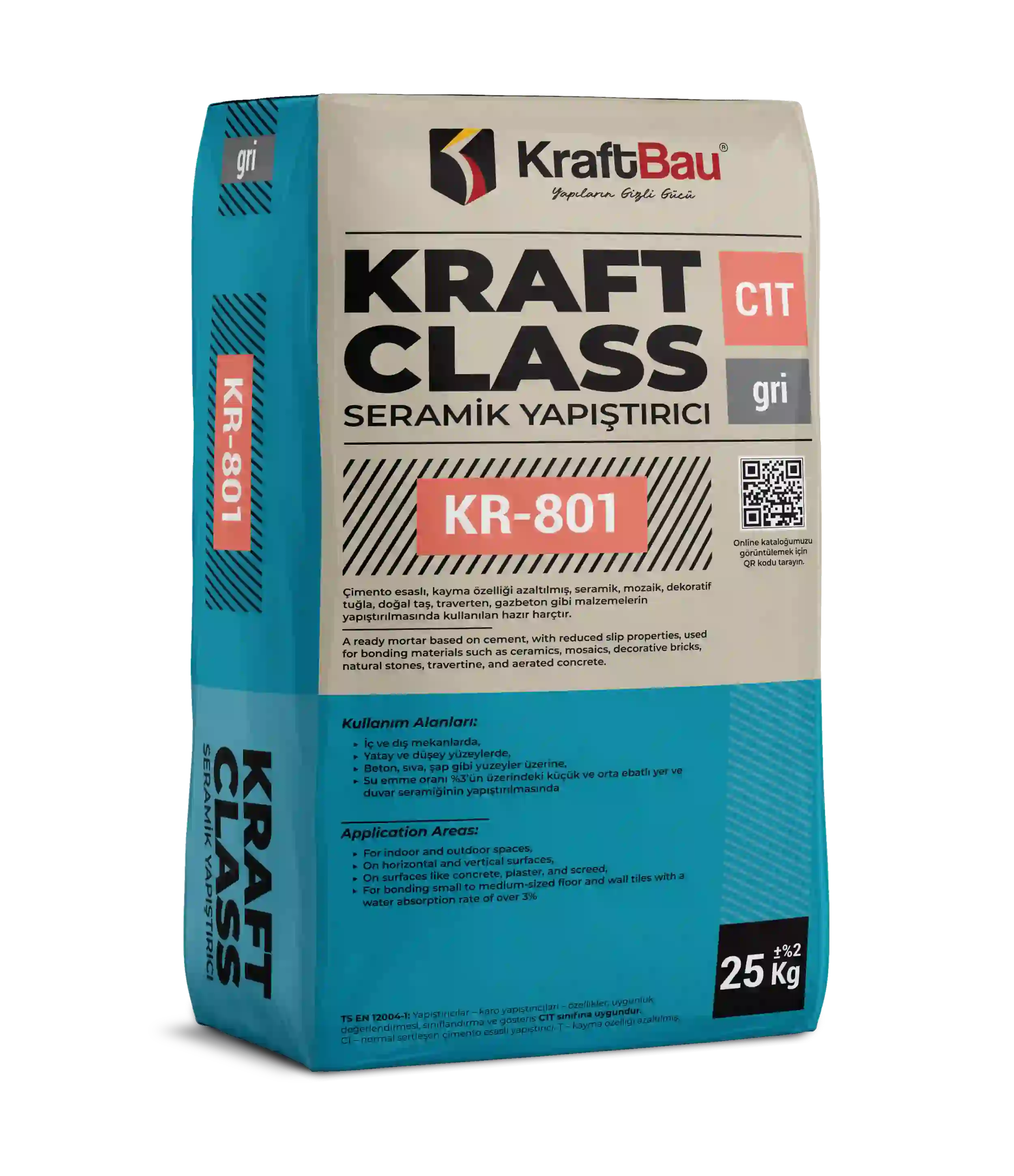
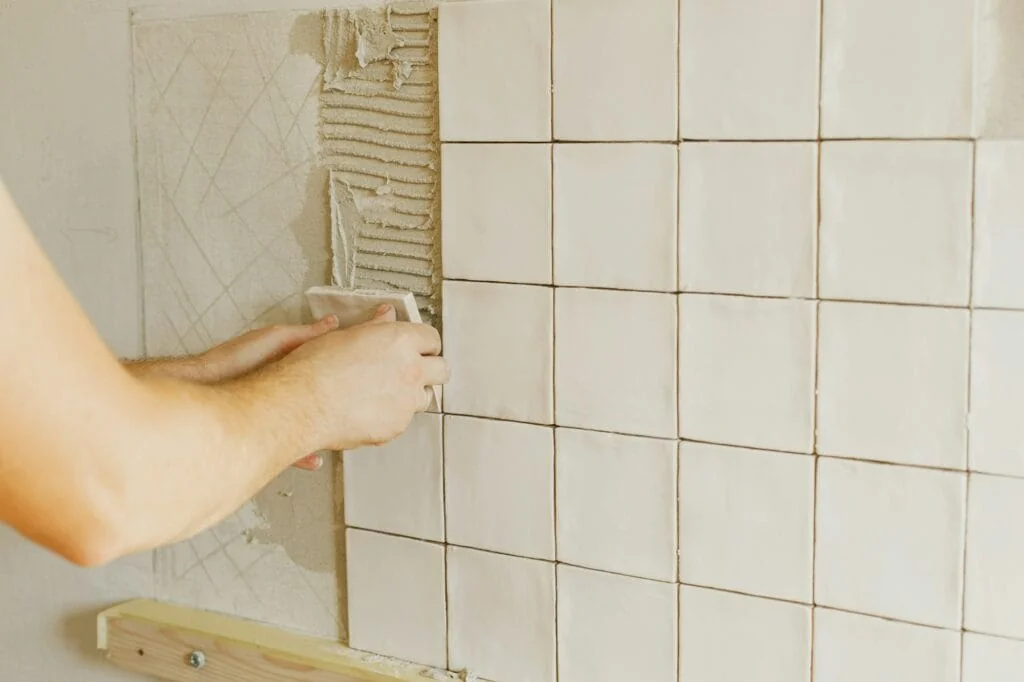
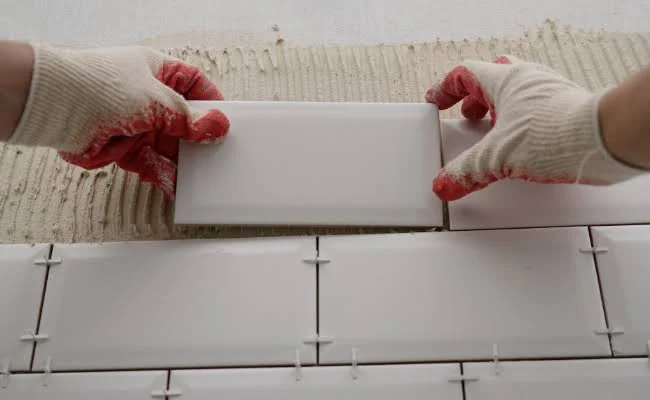
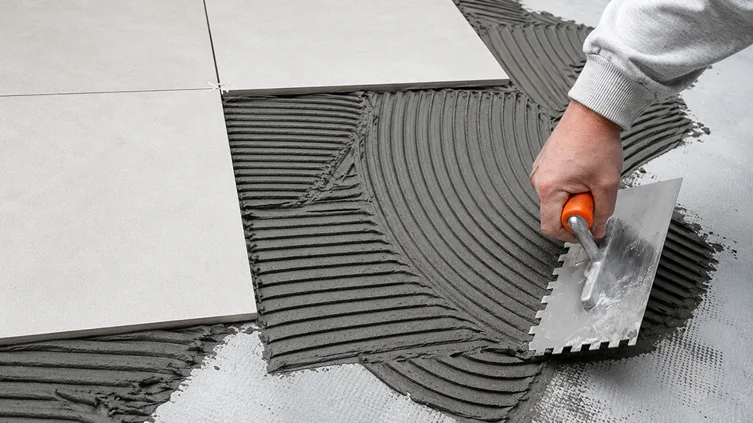
For small and medium-sized absorbent ceramic tiles applied in dry indoor areas, the KraftBau options in class C1 can be considered. For porcelain, granite and low-absorbency coverings, class C2 products should be preferred. As the format grows larger, the flexibility of the adhesive and full contact during application become more critical.
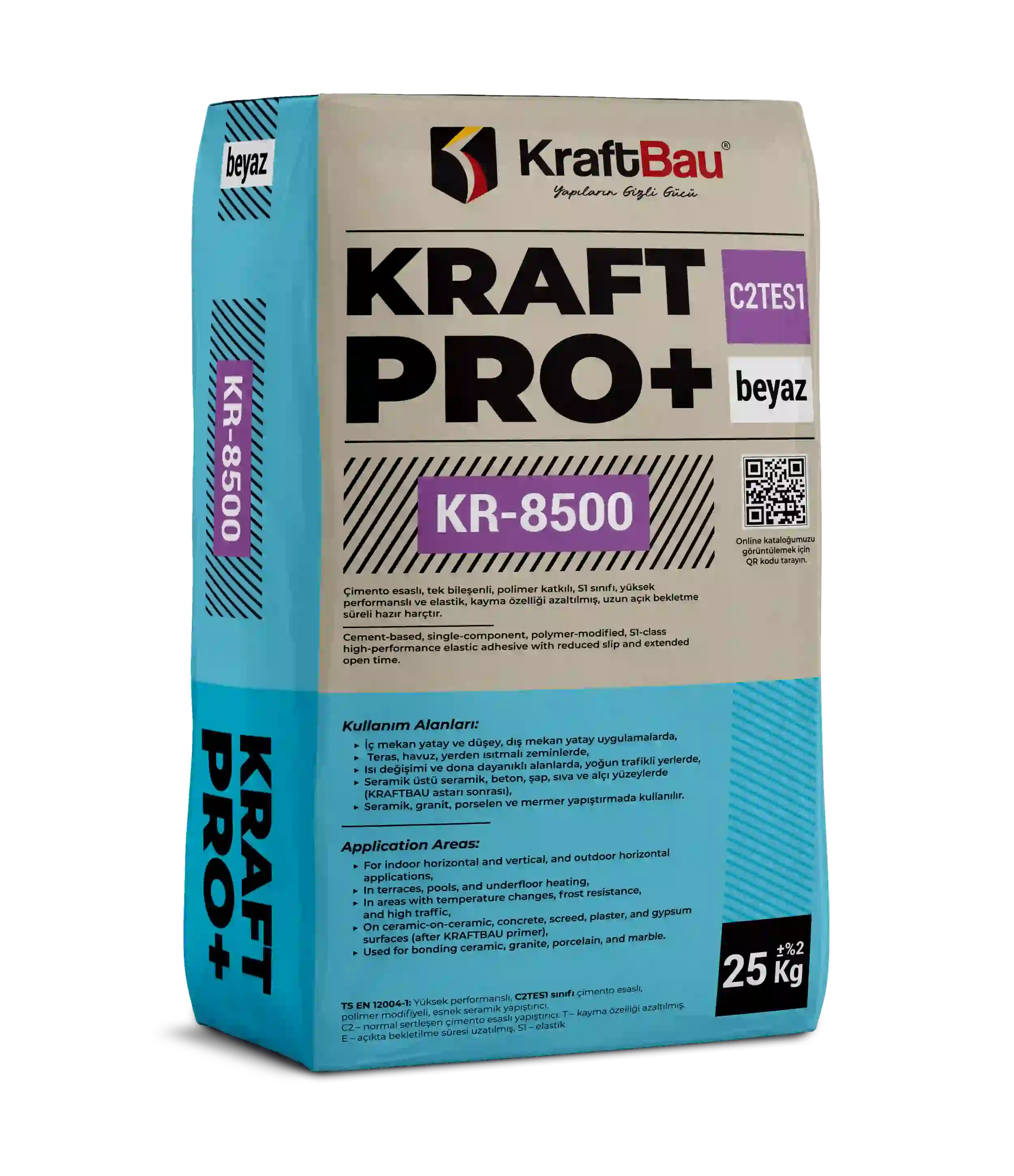
On light-coloured, semi-translucent or stain-sensitive natural stone, choosing a suitable white adhesive helps protect the visual result. On dark, opaque standard coverings the grey option can be an economical solution, provided the technical class is appropriate.
What C1, C2, S1 and S2 mean
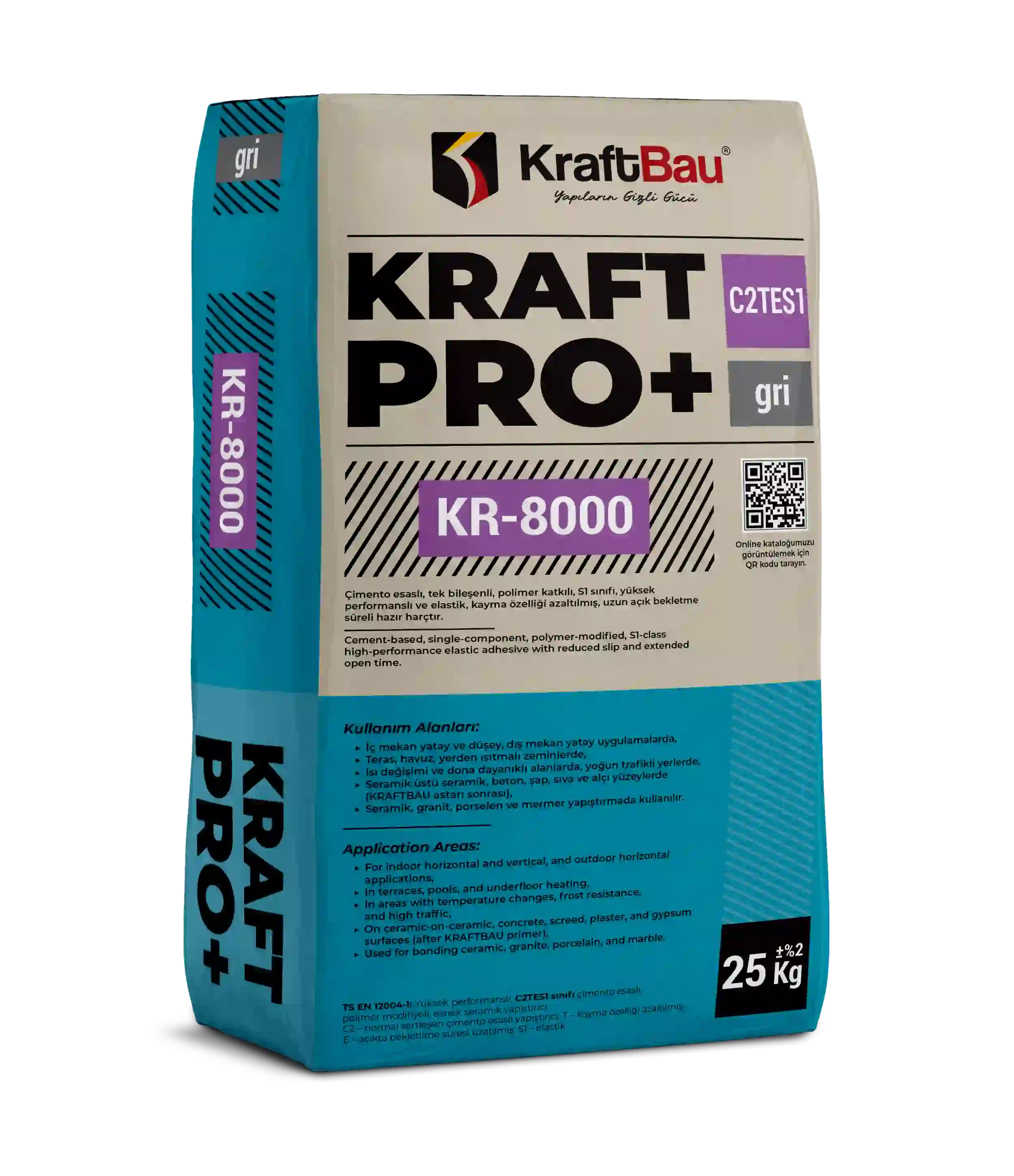
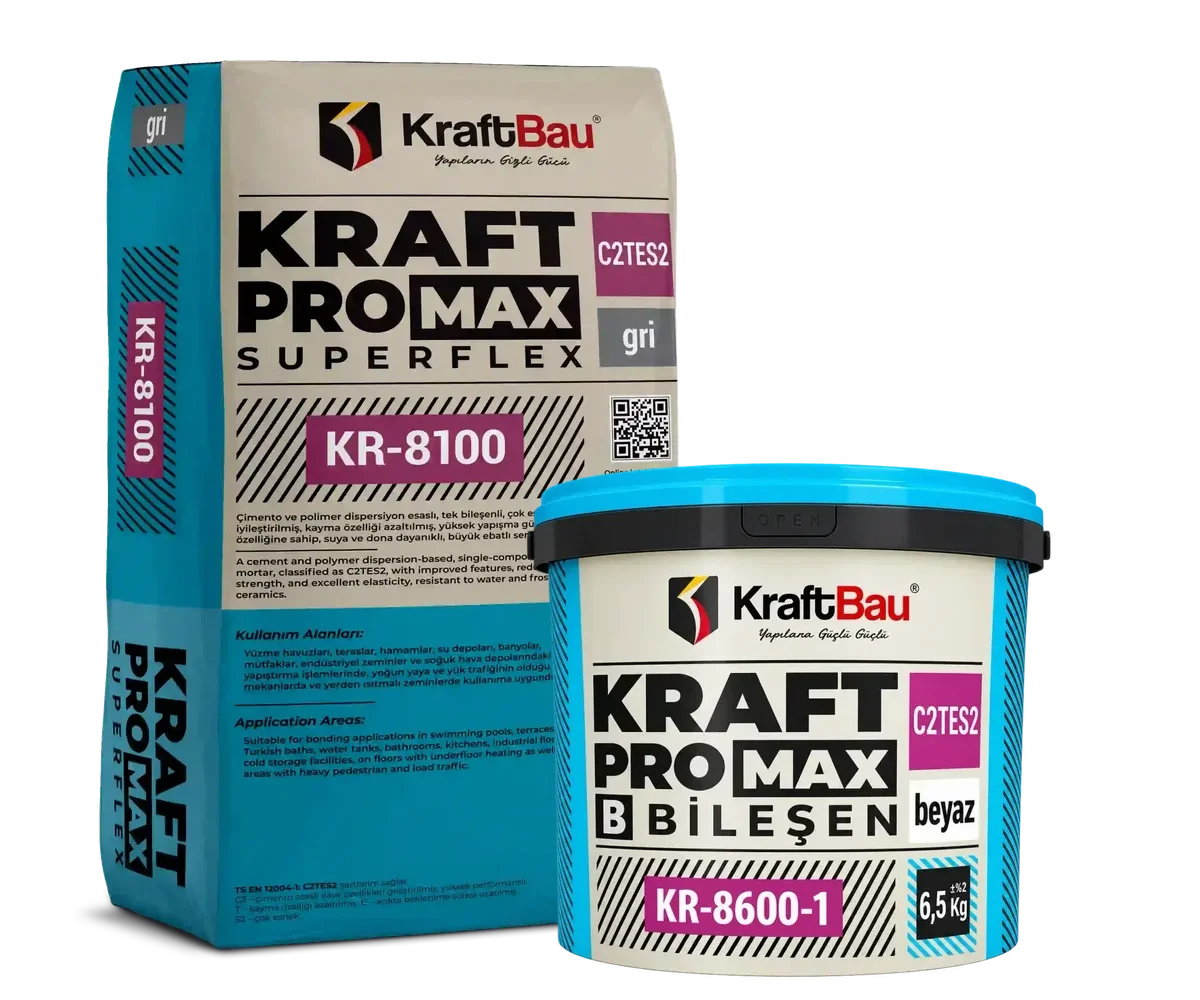
C1 denotes the standard adhesion class and C2 improved adhesion. T indicates reduced slip, and E indicates extended open time. S1 defines adhesives with deformability, and S2 those with higher deformability. A selection should not be made on the C1 or C2 designation alone without reading the full code.
The KraftBau portfolio includes KR-801 and KR-802 for standard indoor use; KR-803, KR-804, KR-807 and KR-808 for C2 applications; KR-805, KR-809, KR-8000 and KR-8500 for work requiring S1; and, for the S2 system, KR-8100 or KR-8600 with the shared KR-8100-1 component B.
A short checklist for the right choice
What is the substrate and is it sound? Is the covering absorbent ceramic, porcelain or natural stone? What are the tile size and weight? Is the area dry, wet, outdoors or a heated floor? Is there a colour sensitivity that requires a white adhesive? Once these questions are answered, the application conditions in the current technical data sheet should be checked.
Product recommendations in this content are based on the KraftBau system file. For consumption, mixing ratio, layer thickness and waiting times, refer to the product's current technical data sheet (TDS); for your project conditions, get technical support.