When a C1 adhesive is considered
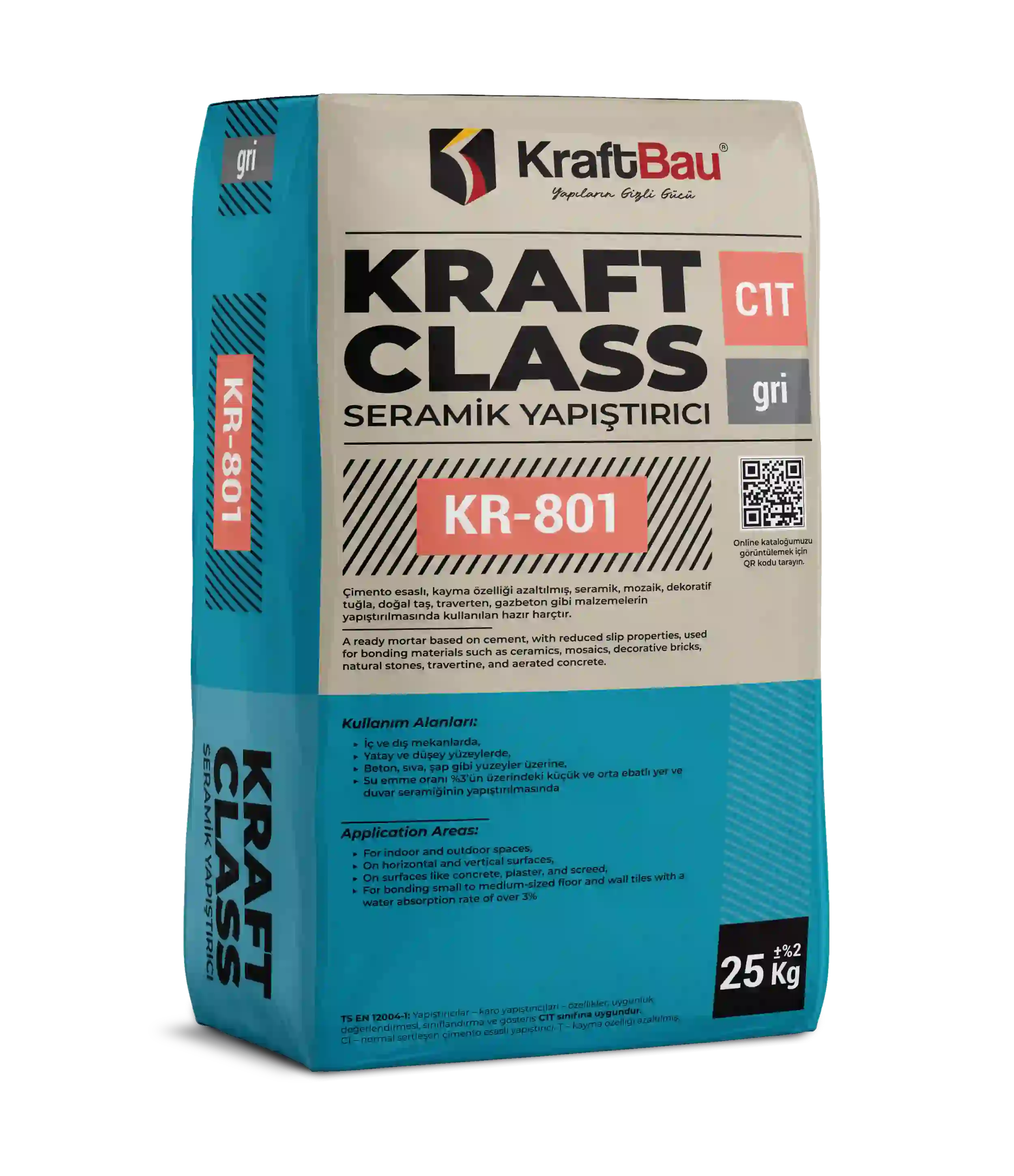
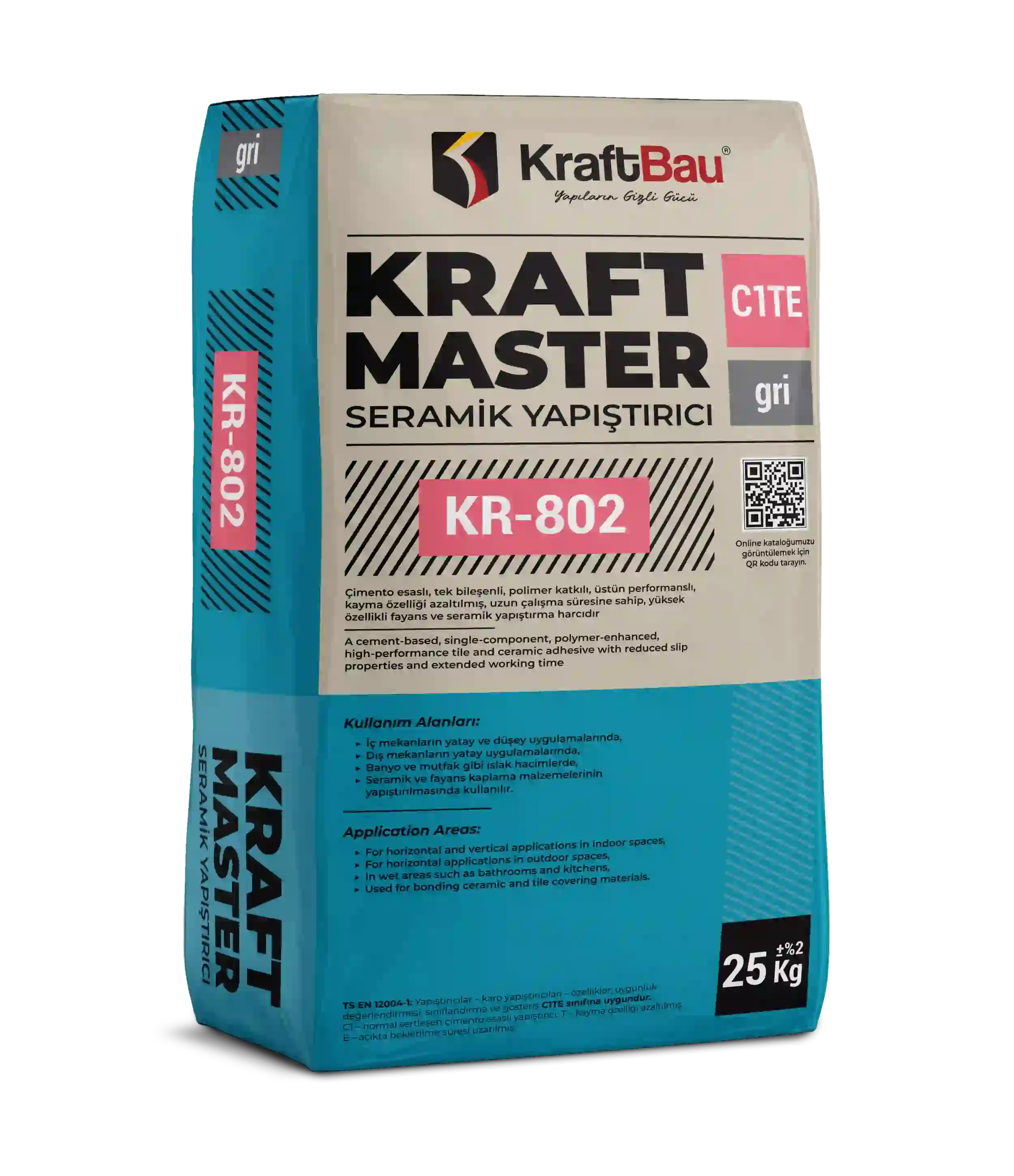
Class C1 products are generally considered in dry indoor areas where small and medium-sized absorbent ceramic tiles are applied to sound mineral substrates. In the KraftBau system, KR-801 KRAFT CLASS C1T is the main standard option; KR-802 KRAFT MASTER C1TE is the performance alternative offering extended open time. Where white is required, KR-806 is considered.
A C1 product should not be carried over to a more demanding application purely for its cost advantage. Where there is low-absorbency porcelain, a large format, an outdoor area or a moving substrate, the choice moves up to C2 and, where necessary, to class S1 or S2.
What a C2 adhesive provides
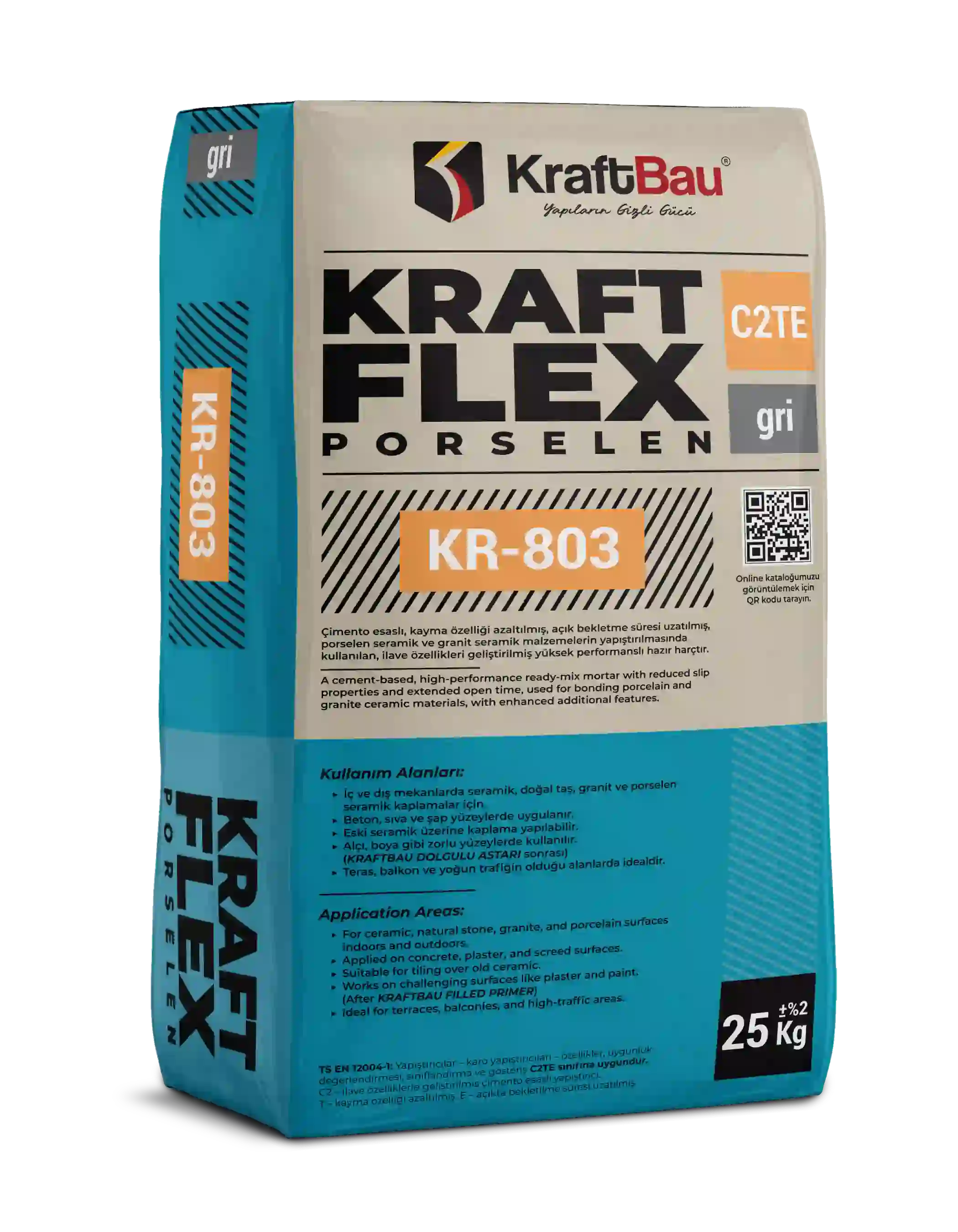
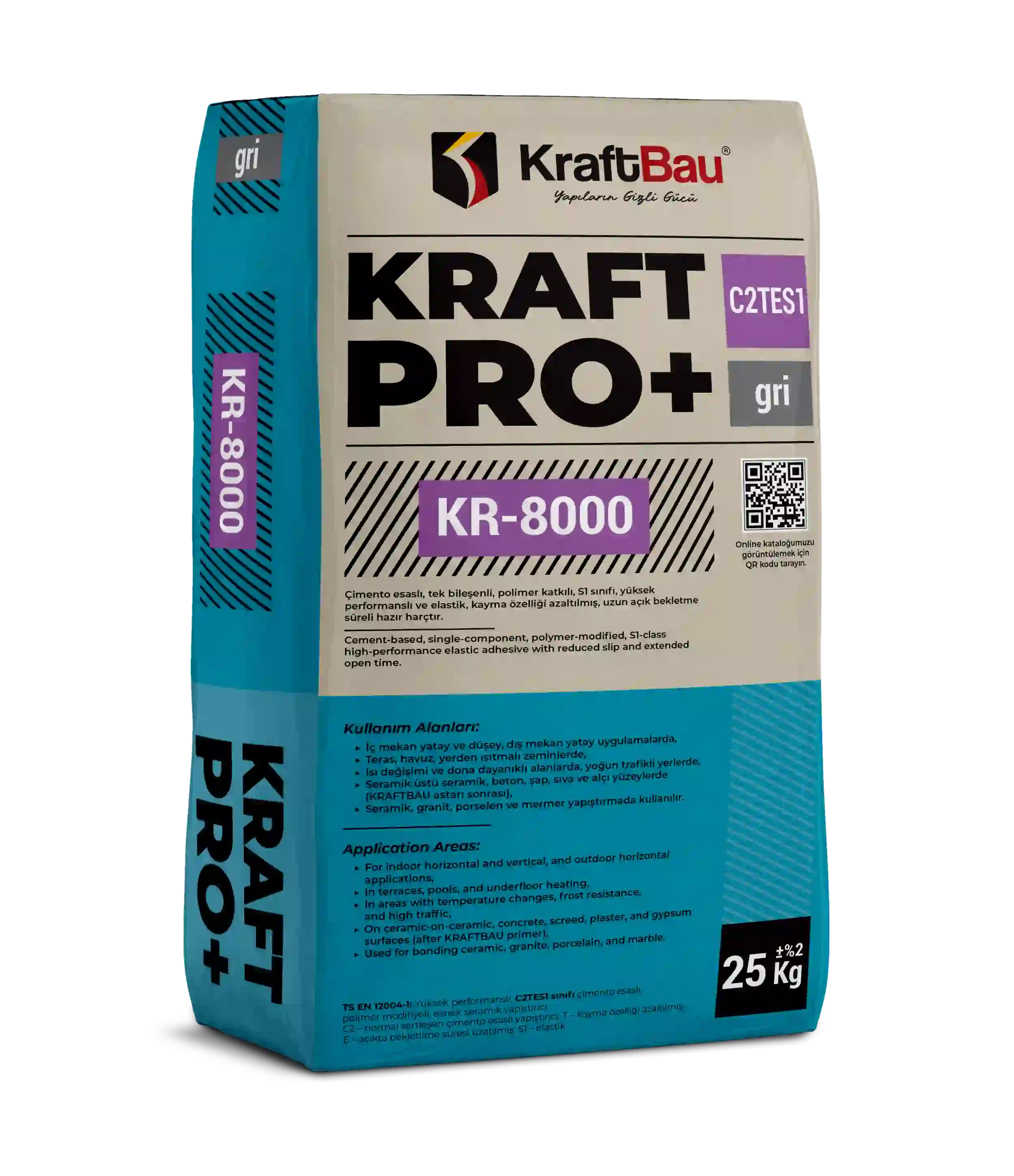
Class C2 denotes improved adhesion performance. It comes to the fore on low-absorbency coverings such as porcelain and granite, on more demanding substrates and in applications where the system demands higher performance. In the KraftBau portfolio, KR-803, KR-804, KR-807 and KR-808 are the C2 options; if movement is expected in the application, the class S1 products KR-805, KR-809, KR-8000 or KR-8500 are considered.
How the letters change the choice
T denotes reduced slip, E extended open time, and S1 and S2 deformability. For example, the designation C2TES1 indicates not only strong adhesion but also slip control, extended working time and S1 flexibility together. The code on the packaging should therefore be read as a whole.
The consequences of choosing the wrong class
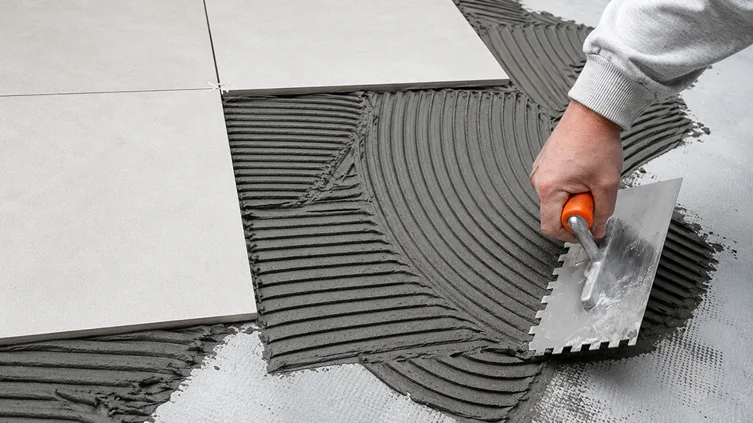
An inadequate class can increase the risk of loss of adhesion, hollow sound, tile movement or the covering detaching from the substrate. A higher class does not compensate for poor surface preparation either. Checking soundness, the correct trowel, uniform combing and double-sided (back-buttering) application for large formats are integral parts of the system.
Product recommendations in this content are based on the KraftBau system file. For consumption, mixing ratio, layer thickness and waiting times, refer to the product's current technical data sheet (TDS); for your project conditions, get technical support.